Exercise
How to Teach Jumping Jacks: Step-Out Options and Practice
By Dave Joisil (Mr. J) · Certified Health and Physical Education teacher
Updated
Break jumping jacks into arms, feet and a step-out option, then practice coordination with a copyable choice card instead of speed or repetition targets.
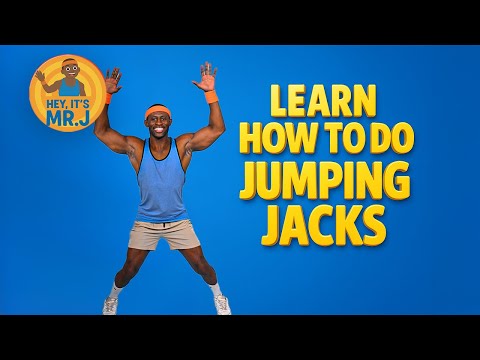
To teach jumping jacks, practice the feet and arms separately, then combine them slowly. In a traditional jack, the feet jump apart as the arms rise, then jump together as the arms lower. A step-out jack replaces the jumping with a side step and return.
The purpose here is coordination, not a fitness test or a contest for the most repetitions. Clear a personal area with room for arms, choose a nonslip surface, and check that overhead movement will not hit furniture. Follow activity restrictions and stop for pain, dizziness, or discomfort.
Feet first, with a pause
Start standing comfortably. Step one foot to the side and bring it back; try the other side. When appropriate, show a small two-foot jump to a comfortable wider stance and a small jump back. Pause between actions so children can reset their balance.
Use “open, close” rather than a rapid count. The wide position should be manageable, not the widest possible stretch. Let knees bend comfortably on landing. A child does not need to progress to jumping in order to participate.
Add a comfortable arm pattern
Practice arms alone: lift outward and upward within a comfortable range, then lower. Touching hands overhead is optional. Arms may stop below shoulder height or use another agreed range.
Combine the feet and arms once: feet open as arms rise, feet close as arms lower. Pause. If the timing is confusing, return to one part rather than turning up the music. A slow teacher demonstration can be more useful than repeated verbal correction.
Teach a step-out jack as its own option
Step one foot sideways while raising the arms, then return it as the arms lower. Repeat to the other side. Keep the movement small if balance is uncertain. This explores the open-close relationship without repeated jumping; it is not a lesser score in a jumping contest.
Learners may use arms only, an individually suitable seated pattern, or another movement in their support plan. Check comfortable posture and available space. Do not move a child's limbs into position or require overhead reach.
Copy-and-print: Open-close choice card
Copy this card for a station or use it to plan an adult model. Change one part at a time.
- My choice today: step out / small jump / arms only / agreed option: ______.
- First practice: feet alone / arms alone.
- Together cue: OPEN and lift — CLOSE and lower — PAUSE.
- I can make it easier by: slowing down / moving less / using one part / resting.
- Adult observation: timing becoming clearer ______ landing controlled ______ support needed ______.
- Next attempt: repeat the same / separate the parts / stop for today.
A short coordination activity
The adult holds up an open-hand picture, then a closed-hand picture. Learners demonstrate their chosen open and closed positions with a pause between. After a few comfortable attempts, let a child lead the cards while an adult supervises. Do not make a sudden signal change a trick that puts anyone out.
Questions teachers ask
Do children need to clap overhead? No. The coordination task does not require a clap or a fixed arm range.
How many should children do? This lesson sets no universal total. Use brief practice with rest, watch comfort and control, and adapt to the learner rather than prescribing a daily challenge.
Video and source
Preview the matching Learn Jumping Jacks tutorial. Pause or use your own model when its pace does not match the group. The gross motor planner helps place coordination alongside other objectives.
For general jumping and landing cues, see PDST fundamental movement skill cue posters. The step-out sequence and choice card are original instructional suggestions; the source does not validate this particular lesson.