Classroom
Preventing Biting in Preschool: A Practical Classroom Plan
By Dave Joisil (Mr. J) · Certified Health and Physical Education teacher
Updated
Build a preschool biting-prevention plan around observation, less crowding, accessible communication, adult support, and a consistent family partnership.
A preschool biting-prevention plan needs more than a rule on the wall. It should help adults notice difficult situations early, make the environment easier to manage, and teach a child an accessible alternative. The goal is to reduce risk while keeping every child safe and supported—not promise a bite-free classroom after one activity.
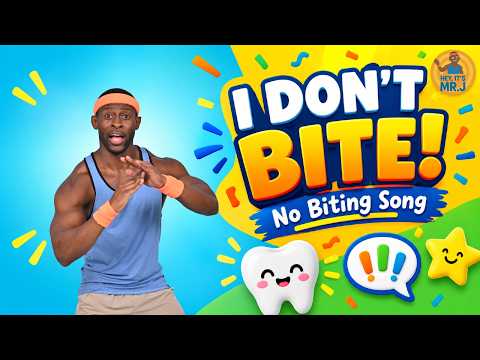
Mr. J’s I Don’t Bite! can be part of the teaching component. The video above introduces space, adult help, and safe responses to feelings. Use it before a relevant activity while children are calm, not as a consequence for one child or a substitute for active supervision.
Start with a shared adult approach
Agree on a brief boundary, an injury-response procedure, and who will support each child when an incident occurs. Follow program policy and staff training. The adults should not be improvising a response while one child is hurt and another is distressed.
NAEYC recommends observing patterns and coordinating with families and teachers when biting continues. ZERO TO THREE’s educator guidance emphasizes proactive conditions, adult support, and alternative ways to solve social problems.
Step 1: Observe the difficult moments
Record the activity, space, people nearby, what happened immediately before the bite, and how adults responded. Note near-misses and successful help-seeking too. A record of only incidents can hide the conditions in which the child is already succeeding.
Use neutral descriptions: “Two children reached for one truck” tells you more than “Couldn’t share.” Protect privacy and follow your recordkeeping policy. Do not display a public biting chart or ask classmates to report on one child.
Step 2: Change the setup
If conflict clusters around one popular material, consider duplicates or a smaller group. If children crowd a shelf, rearrange access or stagger entry. If a transition creates a long wait, prepare the next activity before moving the group.
Check whether adults can see and reach the areas where support is needed. Position staff proactively rather than only reacting from across the room. Adjustments should protect the whole group without making one child visibly responsible for every classroom change.
Step 3: Make communication available
Choose a few consistent messages such as help, stop, space, and turn. Use speech alongside the child’s familiar gestures, signs, pictures, or communication device. The message must be reachable during play, not stored in a folder used only at circle time.
Decide the adult action that goes with each signal. If a child asks for space, help create it. If they ask for a turn, explain the next step and support the wait. The replacement behaviors guide offers practice examples.
Step 4: Rehearse before the pressure point
Before centers, play a short part of I Don’t Bite! and model one message with a puppet. Try the lyric “I need help,” then demonstrate a teacher responding. Keep it brief enough that students can use the same cue shortly afterward.
Use the lesson for everyone without referring to a recent incident or naming a child. Some students may participate through a picture or quiet model instead of music. The recording is optional; the reliable adult response is not.
Step 5: Agree on a family partnership
Invite families into a private, factual conversation. Ask what they notice at home and what helps their child communicate or recover from stress. Share successful moments as well as concerns. Avoid assuming that a behavior in one setting must also happen in the other.
Agree on a small plan: the likely difficult situation, one environmental change, one message to model, and a review point. Use the same general meaning across settings while allowing the child’s home language and familiar communication methods.
A sample plan for crowded block play
Observation: Biting incidents have occurred when several children reach into one block basket. This is an observed pattern, not proof of a single cause.
Environment: Put accessible materials in two locations and reduce crowding at the basket.
Adult support: Place an adult nearby during the busiest part of centers and prompt help before tension grows.
Practice: Model a puppet showing “space,” followed by an adult creating room.
Review: Check whether crowding decreases, whether help signals are noticed, and whether injuries or near-misses continue. If safety is not improving, increase support and revise the plan promptly.
What to review
Look beyond a single good day. Are staff able to use the plan? Is the child communicating earlier? Are peers safer? Does the activity still involve long waits or too few materials? A decline in incidents is useful information, but do not attribute it to the song alone when several supports changed together.
Seek additional help when biting repeats, escalates, causes injuries, or remains hard to anticipate. Involve the program lead, family, pediatrician, or appropriate early-childhood, developmental, or communication professional. There is no need to wait through a preset trial period when children are unsafe.
Avoid prevention plans that become punishment
Do not remove all enjoyable activities, force public apologies, or label a child a “biter.” Do not make another child responsible for monitoring them. A supported quiet break can help meet a need; exclusion used to shame does not teach an alternative.
The song’s message about safe choices is an aspiration to practice with adults. Young children may not yet have reliable impulse control, and a safety plan must account for that rather than depending on a promise.
Frequently asked questions
When should we use the song?
Use a selected section before a relevant activity and connect it to one cue. Skip audio if it adds stress or distracts from supervision.
Is a classroom poster enough?
No. A poster can remind adults and children of a taught message, but it cannot replace accessible communication, prompt help, or environmental changes.
What if the plan is not working?
Review what actually happens, increase immediate safety support, and seek coordinated professional guidance. Do not simply demand more repetitions of the rule.
Related reading
Start with why toddlers bite, use the I Don’t Bite! lesson for rehearsal, and keep the daycare incident-response guide available for the immediate adult steps.
Sources and further reading
NAEYC: Understanding and Responding to Children Who Bite; ZERO TO THREE: Why Do Toddlers Bite? Educator’s Version. This is a suggested classroom planning framework, not a guarantee or a substitute for individualized support.