Teaching & SEL
What Can Kids Do Instead of Biting? 5 Skills to Practice
By Dave Joisil (Mr. J) · Certified Health and Physical Education teacher
Updated
Teach five alternatives to biting: ask for help, signal stop, ask for space, get support with turns, and take a supported pause.
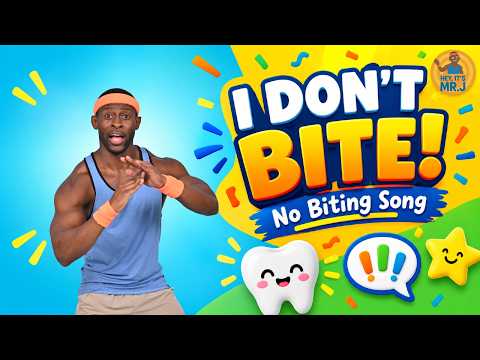
“Don’t bite” sets a boundary, but it does not tell a young child how to get help, keep a toy, or ask someone to move back. A replacement behavior is a safer way to communicate or meet the need involved. The best choice depends on what is happening for that child.
Mr. J’s I Don’t Bite! gives several practice phrases, including “I need help” and “Please move back.” Use the video above as a shared example, then rehearse one useful response in a calm moment. A child may still need adult help to use it during real play.
Make the message easier than the problem
ZERO TO THREE recommends supporting communication and understanding the situation behind biting. NAEYC similarly describes teaching words for needs and limits while keeping expectations individually appropriate.
In practice, do not require a long polite sentence when a one-word message, sign, or picture would work. “Use your words” should not exclude nonspeaking children. Use the child’s established communication system and coordinate changes with their family or communication team.
1. Ask an adult for help
Practice message: “Help,” “I need help,” a familiar sign, or pointing to a help symbol.
Adult response: “I see you need help. Show me.” Move close enough to understand and address the problem. If help repeatedly arrives only after a bite, a poster about asking is not enough; adults need to notice earlier signals.
Rehearsal: Use a puppet with a toy container it cannot open. The puppet signals help, and the adult opens it. Start with a low-stress problem before practicing a social conflict. Do not deliberately frustrate a child to test the skill.
2. Signal stop
Practice message: “Stop,” “Not yet,” or an agreed gesture or symbol.
Adult response: Help the other person stop the unwanted action. A child should not have to deliver the message perfectly before their boundary is taken seriously.
Rehearsal: Have an adult puppet approach another puppet’s play area. The second puppet signals stop; the first pauses. Do not ask children to touch, crowd, or provoke each other as practice partners.
3. Ask for space
Practice message: “Space,” “Please move back,” or a space picture.
Adult response: Create room and help the child reach a safe, supervised place if needed. The song’s “I can take one step back” is one possible action, not a requirement for children who cannot move that way.
Rehearsal: Show two toy figures close together, then move one back after the space signal. Ask, “What changed?” Accept pointing or demonstration. In the real classroom, ensure there is actually somewhere accessible to move.
4. Get support with a turn
Practice message: “My turn?” “Turn, please,” or showing a turn card.
Adult response: Explain what will happen next in a way the child can understand. A simple visual turn cue or another available toy may help. Do not promise an immediate turn if that is not possible.
Rehearsal: An adult and puppet take brief turns with a toy. Show both asking and the supported wait. Waiting is not just saying “wait” repeatedly; the child may need something else to do and an adult close by.
5. Take a supported pause
Practice message: “Break,” a break symbol, or an agreed signal.
Adult response: Offer a quiet supervised option and stay available. A comfortable breath, moving away, or gently squeezing one’s own hands may be options, but none is compulsory or a guaranteed way to calm down.
Rehearsal: Model noticing that a pretend activity is too busy, signaling break, and going with an adult to the quiet area. Explain how to rejoin. A break should not become isolation or a place children are sent to be ashamed.
Choose one skill and make it available
Pick a likely situation, choose one accessible message, and decide how adults will respond. Put the picture where it is needed and ensure familiar staff know its meaning. Practice briefly when calm, then prompt early during real play.
Notice specific attempts: “You showed me help when the blocks fell.” Avoid comparing the child with peers or saying, “You were good because you didn’t bite.” The purpose is to strengthen a usable skill, not attach a moral label to the child.
What if communication is not the main need?
Not all biting is caused by frustration or difficulty speaking. Teething, oral sensory needs, fatigue, and other factors may be involved. Use the reasons toddlers bite guide to decide what to observe, and seek individualized advice when appropriate.
Do not prescribe chewing tools, food, or a new sensory routine from a general article. Safety, hygiene, choking risk, and individual needs matter. A communication lesson can coexist with professional support, but it does not replace it.
Frequently asked questions
What if a child knows the phrase but still bites?
Knowing a phrase when calm does not mean it is available during stress. Prompt earlier, simplify the message, check the adult response, and review the setting.
Should we insist on “please” before helping?
No. Recognize the message and provide support. Courtesy can be modeled without delaying a safety-related response.
Can all five skills be taught at once?
Introduce only what the child can use. One consistent help signal may be a better starting point than a large menu of unfamiliar choices.
Keep the practice connected
Use the no biting song lesson for a group introduction and the preschool prevention plan to make the environment support the messages. If a bite occurs, follow the immediate response guide before returning to teaching.
Sources and further reading
NAEYC: Understanding and Responding to Children Who Bite; ZERO TO THREE: Toddler Biting—Finding the Right Response. The five practice activities are suggested teaching applications, not a tested treatment protocol.