Classroom
A Child Bit at Daycare: What to Do Now—and What to Teach Later
By Dave Joisil (Mr. J) · Certified Health and Physical Education teacher
Updated
A calm response plan for daycare and preschool: protect children, care for the injury, notify families privately, and plan useful follow-up teaching.
When a child bites at daycare, the first job is safety and care—not a lesson, a song, or a long conversation about feelings. Interrupt further harm, care for the child who was bitten, and make sure both children remain appropriately supervised. Teaching comes later, when everyone can participate.
This guide is for general educational use. Follow your program’s safeguarding, first-aid, reporting, and family-notification procedures. It does not replace medical advice or staff training. If you are a parent reading after an incident, ask the program what care was provided and what prevention plan will follow.
1. Interrupt and make the situation safe
Move promptly and calmly to prevent further injury using your setting’s trained safety procedures. Use a brief boundary: “I won’t let you bite. Biting hurts.” Avoid yelling, threats, physical punishment, or an improvised restraint. Get another trained adult when needed.
Do not begin by demanding an explanation. A child who is distressed may not be able to answer “Why did you do that?” reliably. Keep the immediate message short and direct.
2. Care for the child who was bitten
Offer comfort and assess the injury. A useful phrase is, “That hurt. I’m here to help.” Provide first aid within your training and program policy. If the skin is broken, clean the wound with soap and water, cover it with a clean dressing, and seek prompt medical advice because human bites can become infected.
The NHS guidance on animal and human bites advises urgent medical help for human bites that have broken the skin. Deep or large wounds and bleeding that cannot be stopped need emergency care. Use your local medical services rather than treating a website as an assessment of the particular injury.
Continue supervision of the child who bit while care is provided. If staffing permits, one adult can care for the injury while another supports the other child. Do not abandon either child to concentrate on a public discussion of blame.
3. Help both children settle
Offer a safe, supervised place and a calm adult presence. The injured child does not need to resume playing with the other child, accept a hug, or participate in a reconciliation activity. Respect their need for distance.
For the child who bit, keep the boundary and support together: “You wanted the truck. I won’t let you hurt someone. I will help you.” Acknowledging a feeling does not excuse the bite; it helps separate the need from the unsafe action.
4. Record facts and notify families
Document the time, setting, observed events, injury, care, and actions taken according to policy. Describe what you saw rather than writing that a child was “mean,” “manipulative,” or “out of control.” Keep identifying information private and follow applicable reporting requirements.
Notify families separately through the program’s approved process. Families need information about their own child, the response, and the plan—not public identification of another child. Do not handle the discussion in front of a pickup line or group chat.
A factual message to a family
“During block play, your child was bitten. We provided care under our first-aid procedure and are following up about medical assessment as needed. We are reviewing the setup and supervision around that activity. Let’s discuss the details privately.”
For the family of the child who bit: “A bite happened during block play. We interrupted, cared for the injured child, and supported your child. We would like to compare observations and agree on a prevention plan.” Adapt both examples to the actual facts; never imply care happened if it did not.
5. Teach one alternative later
When the child is calm, model a simple response matched to the situation: point to “help,” sign “stop,” or ask for space. Practice with a puppet or adult demonstration instead of recreating the incident with the injured child.
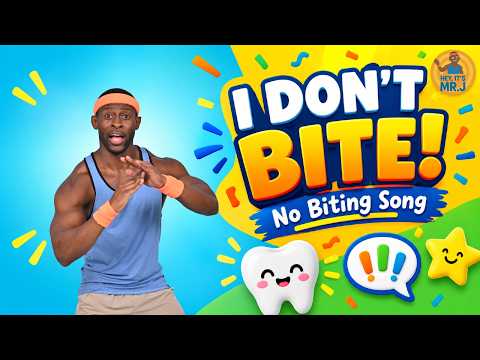
Mr. J’s I Don’t Bite! can support a later general lesson. The lyric “Find a teacher / Find a grown-up” gives a clear adult-help option. Do not make the child watch or sing alone as punishment, and do not play the video over an unresolved injury.
What not to do
- Do not bite a child back, shame them, or label them a “biter.”
- Do not force an apology, hug, or shared play before the injured child is ready.
- Do not rely on “say sorry” as the entire prevention plan.
- Do not promise families that one lesson guarantees it will never happen again.
NAEYC and ZERO TO THREE emphasize calm boundaries, care for the injured child, and teaching alternatives rather than harsh punishment.
Follow up before the next difficult moment
Look at what preceded the bite. Was a popular toy scarce? Was a transition crowded? Was a help signal missed? Adjust supervision and the environment rather than assigning all responsibility to a child who is still learning.
Repeated, escalating, or injurious biting warrants a coordinated plan with the family and program team, with professional support when needed. Protect the other children while continuing to treat the child who bit with dignity.
Frequently asked questions
Should we ask the child to apologize?
You can model repair later, but do not force words or contact. The injured child’s comfort and boundaries come first.
Should we ignore biting to avoid giving attention?
No. Interrupt harm, give care, and maintain supervision. Keeping the correction brief is not the same as ignoring an unsafe incident.
When does the song fit?
In a calm teaching session or preventive rehearsal—not instead of first aid, adult support, or a safety plan.
Related guides
Explore why toddlers bite, safe replacement behaviors, and preventing biting in preschool. For the video-based lesson, see the I Don’t Bite! teaching guide.
Sources and further reading
NHS: Animal and Human Bites; NAEYC: Understanding and Responding to Children Who Bite; ZERO TO THREE: Toddler Biting—Finding the Right Response.