Teaching & SEL
Why Do Toddlers Bite? 7 Possible Reasons and What Adults Can Do
By Dave Joisil (Mr. J) · Certified Health and Physical Education teacher
Updated
Look beyond “bad behavior”: learn seven possible reasons for toddler biting, what to observe, and how to choose a useful next step.
Toddlers may bite for different reasons: to communicate, respond to frustration, explore a sensation, or cope with discomfort or overload. A bite does not identify a child’s personality or prove that they intended harm. It does require a clear safety response and attention to what happened around the incident.
Both NAEYC and ZERO TO THREE describe biting as a behavior that can occur in early development, especially among infants and toddlers. Common does not mean harmless, and it does not mean adults should simply wait for a child to grow out of it.
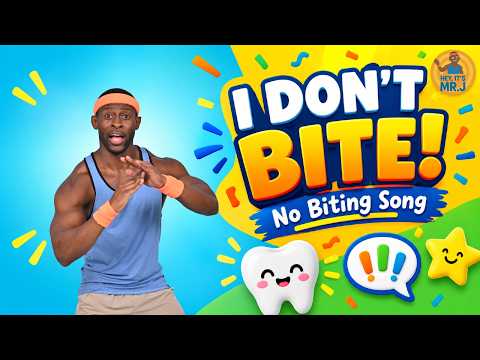
Mr. J’s I Don’t Bite! offers language for feelings, help, and space. Watch the video above during a calm moment, then choose practice that matches the child’s actual need. The song’s feelings-based examples explain some situations, not every cause of biting.
1. The child needs a way to communicate
A child may want a turn, want someone to stop, or need help without being able to send that message effectively in the moment. Even a child who talks fluently when calm can need help communicating during conflict.
Try: Model one short message such as “help” or “stop,” including a gesture, picture, sign, or existing communication device. Respond to the message promptly. Do not withhold help until the child repeats your exact sentence.
2. A toy conflict becomes frustrating
When another child takes a toy, biting may happen before the child can use a different response. ZERO TO THREE’s educator guidance also explains how a toddler may learn that biting changes a difficult situation—for example, another child drops a wanted toy.
Try: Stay nearby during predictable conflicts, offer more than one popular material when possible, and help with turns. Teach what waiting looks like and offer another activity. Do not expect a long verbal explanation to work at the height of frustration.
3. People are too close
A crowded play area, a peer leaning over a project, or unwanted touching may make it difficult for a child to keep comfortable space. The song’s “I need some space” is a useful message only if adults help create that space.
Try: Widen the activity area, reduce crowding, and teach peers to respond to a stop signal. Give the child an adult-supported route to a quieter spot; do not send a distressed toddler away unsupervised.
4. The setting feels overwhelming
Noise, bright activity, and too many simultaneous demands can contribute to overload for some children. This is a possibility to observe, not a diagnosis to infer from a single bite.
Try: Reduce unnecessary sound, offer a quieter play option, and make transitions predictable. If the song adds stimulation rather than helping, use picture cues without audio. Discuss persistent sensory concerns with the child’s family and qualified support team.
5. The child is tired or hungry
NAEYC includes hunger and fatigue among needs that biting may communicate. Look at timing: does difficulty repeatedly appear just before lunch, after a missed rest, or at the end of a long day?
Try: Review routines with caregivers and meet basic needs according to the child’s schedule and program policy. Use observations to adjust support, not to blame a family for one difficult morning.
6. Teething or oral sensations are involved
Some young children bite while teething or seek oral stimulation. This needs a different response from rehearsing a toy-sharing sentence.
Try: Discuss appropriate oral-care or sensory supports with the family and qualified professional as needed. Use only age-appropriate, individually suitable items under supervision and program hygiene rules. Do not improvise with small objects, shared chew items, or foods that pose choking or allergy risks.
7. The child is exploring reactions or feeling excited
Young children explore cause and effect, and biting is not always linked to anger. An adult’s observation should leave room for excitement, experimentation, or imitation rather than assuming every bite means “mad.”
Try: Keep the safety boundary brief and consistent. Notice the lead-up, redirect toward safe play, and reinforce specific alternatives: “You brought me the toy to ask for help.” Avoid dramatic reactions or labels such as “biter.”
What to record without guessing
- Before: Where was the child, what was happening, and what changed just before the bite?
- During: Describe what you saw in neutral language, not motives you cannot know.
- After: What care was provided, how did adults respond, and what changed in the situation?
- Across time: Do similar conditions appear repeatedly, or was this an isolated event?
Keep records private and follow the setting’s incident-reporting policy. A few observations can suggest questions to explore; they do not establish a medical or developmental diagnosis.
When to seek more help
Arrange a prompt conversation with the family, teacher, and program lead when biting repeats, causes injuries, escalates, or feels difficult to prevent. Consult the child’s pediatrician or appropriate developmental or communication professional when there are concerns. Do not wait for a fixed number of incidents if safety is at risk.
For an injury, follow first-aid procedures and seek prompt medical advice for a human bite that breaks the skin. Severe wounds or bleeding that will not stop need emergency care. The daycare response guide separates immediate care from later teaching.
Frequently asked questions
Does biting mean a child is aggressive by nature?
No. A behavior alone does not define a child or establish a diagnosis. Protect others while looking at the context and support needed.
Can a child who speaks well still bite?
Yes. Knowing words is different from being able to use them during a difficult moment. Adult support may still be needed.
Should we use the same response for every cause?
Keep the safety boundary consistent, but match prevention to the need. Teething, crowding, and toy conflict do not call for identical supports.
Put understanding into practice
Use the no biting song lesson for calm rehearsal, replacement behaviors for specific messages, and the preschool prevention plan to improve the environment.
Sources and further reading
NAEYC: Understanding and Responding to Children Who Bite; ZERO TO THREE: Toddler Biting—Finding the Right Response; ZERO TO THREE: Why Do Toddlers Bite? Educator’s Version. These are professional guidance resources, not evidence that this song treats biting.